QMS Survey

food science

QMS Survey

Hello All,

My company iMonitor specializes in building software for the food industry as a whole. We are currently building feature set to specifically cater QMS/GMP/ISO22000 food manufacturing plants.

We need your help to establish the industry landscape.

As an incentive, we are offering $150 USD to a lucky winner

you can answer the survey here

3 posts – 2 participants

Read full topic

https://fstdesk.com/t/qms-survey/6227

Masking sour taste

food science

Masking sour taste

Hi all,

Do any of you have experience with masking sourness (from organic acids) without affecting pH?
The whole process of making this product is wet (vegetables, potatoes).
Sugar and sodium in this product are a no go.

Thank you!

16 posts – 5 participants

Read full topic

https://fstdesk.com/t/masking-sour-taste/6188

Treatment for breast cancer from the pigeon pea

food science

Treatment for breast cancer from the pigeon pea

Need to know about medicinal values of pigeon pea…and also extract the medicinal values for breast cancer from pigeon pea

8 posts – 3 participants

Read full topic

https://fstdesk.com/t/treatment-for-breast-cancer-from-the-pigeon-pea/6163

Addition of sulfur dioxide in Pulps as preservative

food science

Addition of sulfur dioxide in Pulps as preservative

Can anyone help me in something related to addition of sulphur dioxide to fruit pulps… (KMS ADDITION) process how to add and what is the best and fast procedure to determine the SO2 and Is it only the SO2 and Sulphite (Free or Total or Residual) which act as allergens… Or is it the sulphate also…

6 posts – 4 participants

Read full topic

https://fstdesk.com/t/addition-of-sulfur-dioxide-in-pulps-as-preservative/6137

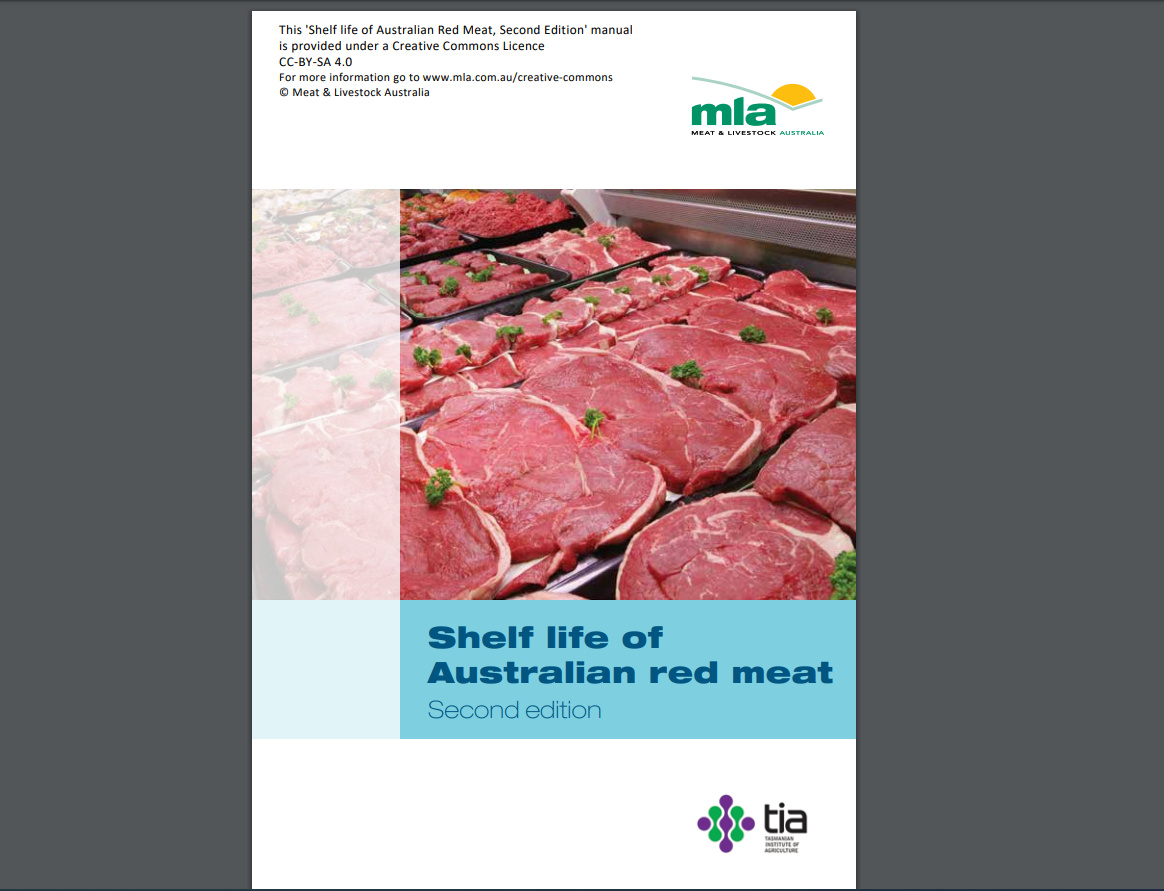
Shelf life of Australian red meat

food science

Shelf life of Australian red meat

Australian meat has a reputation around the world for excellent shelf life. The Australian meat industry produces meat products with shelf lives ranging from a few days (entire cuts, roasts and ground meats) to several months (vacuum-packed primals) to more than one year (frozen manufacturing meat). The industry services domestic and export markets in the retail and further processing sectors, all of which impose specifications or standards which relate to shelf life.

The purpose of this book is to explain the important elements that contribute to shelf life so that everyone in the supply chain can do their part to maintain a superior standard. It is also intended for Australian meat customers so that they can understand the technical aspects of the product, what to expect of
Australian meat and how to set appropriate criteria for product acceptance.

As will be seen from the Contents page, the scope of this book is wide.

It provides up-to-date information on the shelf life of Australian meat for a range of users who operate in the technical, regulatory and marketing spheres. To satisfy this broad spectrum of readers, each section is ‘paced’, progressing from a basic level and ending with the latest research work; a reference list is provided at the end of each section for those who wish to read further.
This second edition contains numerous research updates from CSIRO and University of Tasmania on shelf life of primals and sub primals, and on interventions. The shelf life predictor has also been developed to a stage where it has great potential value, especially for emerging markets where the
cold chain infrastructure is not well developed.

Download the book.

shelf-life-of-australian-red-meat-2nd-edition.pdf (1.3 MB)

Resoruce.
https://www.mla.com.au/

1 post – 1 participant

Read full topic

https://fstdesk.com/t/shelf-life-of-australian-red-meat/6099

Coconut milk

food science

Coconut milk

Hi, please can you help me to find a solution for my problem with the coconut milk.When I drained it the milk in nut milk bag its great,but after 10minutes its making 2 phases because of the fat from the milk.My question is how to make stay in one phase and stay longer than a mounth ( is it ok with potassium sorbate or lactic acid?). Thank you

2 posts – 2 participants

Read full topic

https://fstdesk.com/t/coconut-milk/6591

Raw and pasteurised milk: A comprehensive comparison for consumer

food science

Raw and pasteurised milk: A comprehensive comparison for consumer

The major difference in drinking raw unprocessed and pasteurized milk is in its bacterial count. In the subtropical and developing countries where milking is still a small scale hand-operated task, in the marginal area of farms, the initial bacterial count of raw milk reaches up to 2-3 lacks bacteria/ml. Even though we are boiling milk in the kitchen, the cooling happens at a natural slow speed. In this time the spores (eggs or dormant bacterial cells) again germinate between 55-65°C temperature range. In industrial pasteurization, however, the milk is RAPIDLY COOLED to below 5°C before spores are germinated. this brings down the bacterial population to below 20,000/ml in pasteurized milk and practically ZERO in UHT sterilized milk.

FSSAI has made regulatory standards for all food products that allow maximum of 20k bacterial cells in milk samples. If any 2 or more samples out of 5 are found above 20k, or even 1 out of 5 is above 50k, the entire batch is compulsorily reprocessed before it reaches the shelf. COURSE, WE CANNOT ACHIEVE THIS EFFECT IN OUR KITCHEN making it safest to drink only pasteurized/ heat-treated milk.

Ashish Sahuji,
B.Tech (Dairy Technology) Student

This article by Ashish Sahuji is licensed under a Creative Commons Attribution-ShareAlike 4.0 International License.
Based on a work at www.profdumbledairy.com.

1 post – 1 participant

Read full topic

https://fstdesk.com/t/raw-and-pasteurised-milk-a-comprehensive-comparison-for-consumer/6580

Safety, Quality and Processing of Fruits and Vegetables

food science

Safety, Quality and Processing of Fruits and Vegetables

Nowadays, one of the main objectives of the fruit and vegetable industry is to develop
innovative novel products with high quality, safety, and optimal nutritional characteristics in order to
respond with efficiency to the increasing consumer expectations. Various emerging, unconventional
technologies (e.g., pulsed electric field, pulsed light, ultrasound, high pressure, and microwave
drying) enable the processing of fruits and vegetables, increasing their stability while preserving their
thermolabile nutrients, flavour, texture, and overall quality. Some of these technologies can also be
used for waste and by-product valorisation. The application of fast noninvasive methods for process
control is of great importance for the fruit and vegetable industry. The following Special Issue “Safety,
Quality, and Processing of Fruits and Vegetables” consists of 11 papers, which provide a high-value
contribution to the existing knowledge on safety aspects, quality evaluation, and emerging processing
technologies for fruits and vegetables.

Read full article.

https://cdn.fstdesk.com/safety-quality-and-processing-of-fruits-and-vegetables.html

https://doi.org/10.3390/books978-3-03928-087-2
© 2020 by the authors; CC BY licence

1 post – 1 participant

Read full topic

https://fstdesk.com/t/safety-quality-and-processing-of-fruits-and-vegetables/6579