How to read nutrition facts in food labelling?

food science

How to read nutrition facts in food labelling?

Food labels are a legal requirement that every manufacturer need to provide information to their consumer. They provide a piece of brief information about the product, whether they are safe or not. It also helps to communicate to consumers about the product.

Usually, Food label contains information about, They are

  • Nutritional quantity
  • Manufacturing and Contact information
  • Ingredients list and Allergen Caution

How to calculate and read nutrition facts in food label

1 post – 1 participant

Read full topic

https://fstdesk.com/t/how-to-read-nutrition-facts-in-food-labelling/4935

Water Storage Rooms

food science

Water Storage Rooms

Dear Food Safety Colleagues

I have an inquire related to water storage rooms under ground.

What are the required Food Safety Conditions to use the water from these rooms in Food processing?

The source of water is the city water and the room is intermediate stage till using it in food processing .
filters are used in the point of use and water analysis is in place annually.

is there any additional requirement regarding the room constructions, paint and cleaning method?

6 posts – 2 participants

Read full topic

https://fstdesk.com/t/water-storage-rooms/4920

Haccp & covid-19

food science

Haccp & covid-19

Hi Everyone,
I would like to know if you are including in your HACCP as Biological critical control point the COVID-19 taking in account that you have some probabilities to contract it if you do not carry out or your disinfection protocol is not controlled as for example in the finished product outlet the exposure time of the disinfectant was insufficient.

Or it is not necessary to do it because you previously controlled that there are no positive workers and taking into account that there is no basis for transmission by food, well if only in packaging.

3 posts – 2 participants

Read full topic

https://fstdesk.com/t/haccp-covid-19/4899

Sewage Polluted Water Treatment via Chitosan: A Review

food science

Sewage Polluted Water Treatment via Chitosan: A Review

image

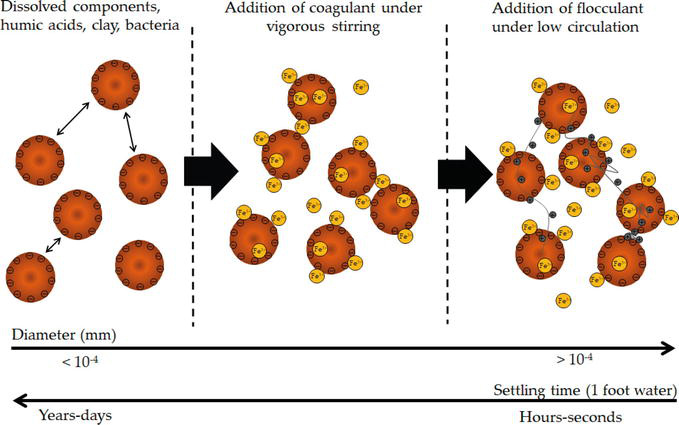
Due to the increasing scarcity of water, wastewater treatment and water conditioning are one of the major future issues. Together with the need to apply highly accessible abundant materials and the demand to replace fossil-based chemicals with sustainable compounds from renewable resources, chitosan (CS) provides some of the solutions to obtain these goals and combines both, abundance and sustainability. Hence, the focus of this review is on the application of CS in wastewater treatment providing advantages and drawbacks in using CS in contrast to chitin. We herewith present the application of CS for coagulation/flocculation purposes, whether as native compound, as functionalized molecule or as blend, respectively, composite. The heavy metal, respectively, dye removal is an additional theme to be addressed in the body of the text. The third topic of this review contains the application of CS blends or composites in order to prepare membrane materials for water purification or conditioning. Together with a summary of the recent study, we discuss these findings and possible consequences for future works. In addition, we provide some theoretical background of the processes that CS is involved in and state some mechanistic insights.

Read the full article.

Sewage Polluted Water Treatment via Chitosan.pdf (3.0 MB)

Thomas Hahn and Susanne Zibek (July 18th 2018). Sewage Polluted Water Treatment via Chitosan: A Review, Chitin-Chitosan – Myriad Functionalities in Science and Technology, Rajendra Sukhadeorao Dongre, IntechOpen, DOI: 10.5772/intechopen.75395. Available from: https://www.intechopen.com/books/chitin-chitosan-myriad-functionalities-in-science-and-technology/sewage-polluted-water-treatment-via-chitosan-a-review

1 post – 1 participant

Read full topic

https://fstdesk.com/t/sewage-polluted-water-treatment-via-chitosan-a-review/4857

Ultrasound Application to Improve Meat Quality

food science

Ultrasound Application to Improve Meat Quality

High-intensity ultrasound offers an alternative to traditional methods of food preservation and is regarded as a green, versatile, popular, and promising emerging technology. Ultrasound generates acoustic cavitation in a liquid medium, developing physical forces that are considered the main mechanism responsible for the observed changes in exposed materials. In meat, ultrasound has been successfully used to improve processes such as mass transfer and marination, tenderization of meat ,and inactivation of microorganisms. It is also an alternative to traditional meat aging methods for improving the quality properties of meat. Moreover, the combination of ultrasonic energy with a sanitizing agent can improve the effect of microbial reduction in foods. This review describes recent potential applications of ultrasound in meat systems, as well as physical and chemical effects of ultrasound treatments on the conservation and modification of processed meat foods.

Evolution of food processes is driven by changes in consumer preferences and the need to produce safe and high-quality foods. Nonthermal or intermediate technologies have great potential to achieve the characteristics desired by both the industry and consumers, especially regarding the desire to avoid altering the flavor or nutritional content during production. These technologies, which include the use of high pressure, electrical pulses, microfiltration, and ultrasonication, are especially designed for economy, simplicity, and energy efficiency. Ultrasound is an acoustic energy , and therefore, it is a nonionizing, noninvasive, and nonpolluting form of mechanical energy. These properties lead to a wide range of applications in the food industry. It is considered an emerging method with a great potential to control, improve, and accelerate processes without damaging the quality of food and other products . A low-power and high-frequency method is used to monitor the composition and physicochemical properties of food components and products during processing. Therefore, it contributes to control the properties that improve food quality. In recent years, research studies have been focused on assessing the effects of ultrasound on processes including mass transfer or marinating, meat tenderizing, crystallization, freezing, drying, degassing, filtration, foam production and reduction, emulsification, homogenization, and inactivation of microorganisms and enzymes . Ultrasound has also been employed to optimize physicochemical characteristics, preparation processes for meat products, microbiological content, and sensory characteristics in fresh and processed meat . Although ultrasound waves have been used to improve a wide variety of characteristics for a variety of matrices and processes, the appropriate conditions for scaling ultrasonic methods up to industrial levels have been established for a relatively small number of processes .

As emphasized by Chemat et al. a key goal of ultrasound research is to study and analyze both desirable and undesirable degradation phenomena in foods resulting from ultrasonic treatment (e.g., ultrasonic processing may affect the texture and chemical composition of foods). For this reason, many research questions in the meat sector are yet to be elucidated. Although multiple reports have been published, still inconsistent results have been reported, maybe because of the specific nature of meat tissues and various factors of ultrasound application possibly involved in, affecting food properties. This review aims to identify the effect of ultrasound on the major quality characteristics of fresh meat. We believe the results will help establish a methodology to enable the scaling-up of ultrasonic technology to the industrial level.

Read the full article.

Ultrasound Application to Improve Meat Quality.pdf (2.0 MB)

Alma D. Alarcon-Rojo, Esmeralda Peña-González, Iván García-
Galicia, Luis Carrillo-López, Mariana Huerta-Jiménez, Raúl Reyes-
Villagrana and Hector Janacua-Vidales (November 5th 2018). Ultrasound Application to Improve Meat Quality, Descriptive Food Science, Antonio Valero Díaz and Rosa María García-Gimeno, IntechOpen, DOI: 10.5772/intechopen.77973. Available from: Ultrasound Application to Improve Meat Quality | IntechOpen

1 post – 1 participant

Read full topic

https://fstdesk.com/t/ultrasound-application-to-improve-meat-quality/4854

Ultrasound Application to Improve Meat Quality

food science

Ultrasound Application to Improve Meat Quality

High-intensity ultrasound offers an alternative to traditional methods of food preservation and is regarded as a green, versatile, popular, and promising emerging technology. Ultrasound generates acoustic cavitation in a liquid medium, developing physical forces that are considered the main mechanism responsible for the observed changes in exposed materials. In meat, ultrasound has been successfully used to improve processes such as mass transfer and marination, tenderization of meat ,and inactivation of microorganisms. It is also an alternative to traditional meat aging methods for improving the quality properties of meat. Moreover, the combination of ultrasonic energy with a sanitizing agent can improve the effect of microbial reduction in foods. This review describes recent potential applications of ultrasound in meat systems, as well as physical and chemical effects of ultrasound treatments on the conservation and modification of processed meat foods.

Evolution of food processes is driven by changes in consumer preferences and the need to produce safe and high-quality foods. Nonthermal or intermediate technologies have great potential to achieve the characteristics desired by both the industry and consumers, especially regarding the desire to avoid altering the flavor or nutritional content during production. These technologies, which include the use of high pressure, electrical pulses, microfiltration, and ultrasonication, are especially designed for economy, simplicity, and energy efficiency. Ultrasound is an acoustic energy , and therefore, it is a nonionizing, noninvasive, and nonpolluting form of mechanical energy. These properties lead to a wide range of applications in the food industry. It is considered an emerging method with a great potential to control, improve, and accelerate processes without damaging the quality of food and other products . A low-power and high-frequency method is used to monitor the composition and physicochemical properties of food components and products during processing. Therefore, it contributes to control the properties that improve food quality. In recent years, research studies have been focused on assessing the effects of ultrasound on processes including mass transfer or marinating, meat tenderizing, crystallization, freezing, drying, degassing, filtration, foam production and reduction, emulsification, homogenization, and inactivation of microorganisms and enzymes . Ultrasound has also been employed to optimize physicochemical characteristics, preparation processes for meat products, microbiological content, and sensory characteristics in fresh and processed meat . Although ultrasound waves have been used to improve a wide variety of characteristics for a variety of matrices and processes, the appropriate conditions for scaling ultrasonic methods up to industrial levels have been established for a relatively small number of processes .

As emphasized by Chemat et al. a key goal of ultrasound research is to study and analyze both desirable and undesirable degradation phenomena in foods resulting from ultrasonic treatment (e.g., ultrasonic processing may affect the texture and chemical composition of foods). For this reason, many research questions in the meat sector are yet to be elucidated. Although multiple reports have been published, still inconsistent results have been reported, maybe because of the specific nature of meat tissues and various factors of ultrasound application possibly involved in, affecting food properties. This review aims to identify the effect of ultrasound on the major quality characteristics of fresh meat. We believe the results will help establish a methodology to enable the scaling-up of ultrasonic technology to the industrial level.

Read the full article.

Ultrasound Application to Improve Meat Quality.pdf (2.0 MB)

Alma D. Alarcon-Rojo, Esmeralda Peña-González, Iván García-
Galicia, Luis Carrillo-López, Mariana Huerta-Jiménez, Raúl Reyes-
Villagrana and Hector Janacua-Vidales (November 5th 2018). Ultrasound Application to Improve Meat Quality, Descriptive Food Science, Antonio Valero Díaz and Rosa María García-Gimeno, IntechOpen, DOI: 10.5772/intechopen.77973. Available from: Ultrasound Application to Improve Meat Quality | IntechOpen

1 post – 1 participant

Read full topic

https://fstdesk.com/t/ultrasound-application-to-improve-meat-quality/4854

Chip Curvature designing

food science

Chip Curvature designing

Most of the time, I wonder why potato chips are designed as curve one?
Later, I found out this technical terminology behind their secret called as chip curvature.
Is it there any design preference used in certain food products?!

3 posts – 3 participants

Read full topic

https://fstdesk.com/t/chip-curvature-designing/5109

Browning of Chilled Raw beef patty

food science

Browning of Chilled Raw beef patty

Dear all,
Is there any method to stop or reduce the browning of raw beef patty… we dont want to add any artificial preservatives. The expected life of the product is 3 days. So we need to avoid browning for 3 days.

Thanks.

6 posts – 3 participants

Read full topic

https://fstdesk.com/t/browning-of-chilled-raw-beef-patty/4792