Cassava and Almond Flour Tortillas Validation

food science

Cassava and Almond Flour Tortillas Validation

Looking for a validation study for time/temp cook time for cassava and almond flour tortillas. I have not had any luck on line and working with a vendor to help them validate their CCPs.

2 posts – 2 participants

Read full topic

https://fstdesk.com/t/cassava-and-almond-flour-tortillas-validation/5916

What do you think about GMO’s?

food science

What do you think about GMO’s?

Hi all,

What do you think about GMO’s?

Here are some explanations from FDA.

GMO foods have been available to consumers since the early 1990s. Since then, the U.S. Food and Drug Administration (FDA), U.S. Environmental Protection Agency (EPA), and U.S. Department of Agriculture (USDA) have worked together to ensure that crops produced through genetic engineering are safe for people, animals, and the environment.

Despite there being a wide range of foods—GMO and non-GMO—available to consumers, there is some confusion around what GMOs are and how they are used in our food supply.

GMOs 101: Your Basic Questions Answered

To help increase consumer understanding of GMOs, in 2017, Congress provided funding for an Agricultural Biotechnology Education and Outreach Initiative, which calls upon FDA to work with EPA and USDA to share science-based educational information about GMOs, beginning with answers to some basic GMO questions.

What makes it a GMO?

A GMO (genetically modified organism) is a plant, animal, or microorganism that has had its genetic material (DNA) changed using technology that generally involves the specific modification of DNA, including the transfer of specific DNA from one organism to another. Scientists often refer to this process as genetic engineering.

Is it called GMO or something else?

“GMO” has become the common term consumers and popular media use to describe foods that have been created through genetic engineering. This term is not generally used to refer to plants or animals developed with selective breeding, like the common garden strawberries available today that were created from a cross between a species native to North America and a species native to South America. While “genetic engineering” is the term typically used by scientists, you will start seeing the “bioengineered” label on some of the foods we eat in the United States because of the new National Bioengineered Food Disclosure Standard.

Why do we have GMOs?

Humans have used traditional ways to modify crops and animals to suit their needs and tastes for more than 10,000 years. Cross-breeding, selective breeding, and mutation breeding are examples of traditional ways to make these changes. These breeding methods often involve mixing all of the genes from two different sources. They are used to create common crops like modern corn varieties and seedless watermelon.

Modern technology now allows scientists to use genetic engineering to take just a beneficial gene, like insect resistance or drought tolerance, and transfer it into a plant. The reasons for genetic modification today are similar to what they were thousands of years ago: higher crop yields, less crop loss, longer storage life, better appearance, better nutrition, or some combination of these traits.

Do GMOs affect your health?

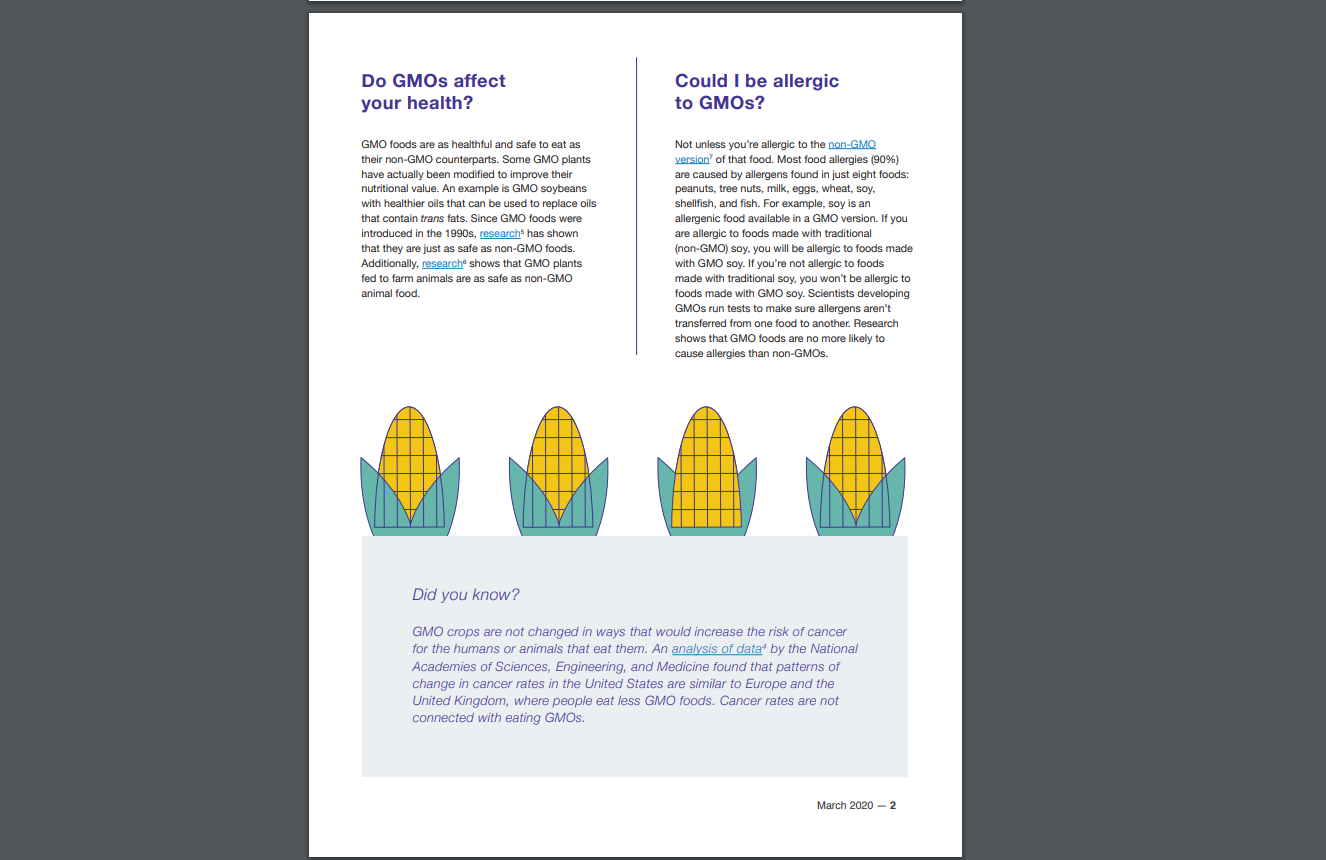
GMO foods are as healthful and safe to eat as their non-GMO counterparts. Some GMO plants have actually been modified to improve their nutritional value.

An example is GMO soybeans with healthier oils that can be used to replace oils that contain trans fats. Since GMO foods were introduced in the 1990s, has shown that they are just as safe as non-GMO foods.

Additionally, External Link Disclaimer shows that GMO plants fed to farm animals are as safe as non-GMO animal food.

Do GMO plants reduce pesticide use?

Some GMO plants contain [plant-incorporated protectants (PIPs) to make them resistant to insects, reducing the need for and use of many [spray pesticides. As another safety measure, EPA works with developers and scientists to help develop GMOs that will resist insects for as long as possible through their Insect Resistance Management program. Other GMO plants are developed to tolerate certain weed killers, which allows farmers a wide variety of options for weed control. Some people are concerned that farmers who grow these GMOs will use more weed killer. While this is sometimes the case, EPA regulates the safety of all weed killers that farmers use on GMO crops and non-GMO crops alike. EPA also shares information to help farmers who are concerned about weeds developing resistance to weed killers.

2 posts – 2 participants

Read full topic

https://fstdesk.com/t/what-do-you-think-about-gmos/5914

Nanostructured Colloids in Food Science

food science

Nanostructured Colloids in Food Science

image

Nanostructured colloids are materials with at least one dimension in the nanometer range (<100 nm). Such materials find multiple and exciting applications in various areas of food science, and can lead to development of new and innovative food products and ingredients.

Nanostructured colloids can be naturally present in food or they can be synthetically manufactured and added during different stages of food production and packaging. The building blocks of nanostructures in food consist of organic molecules (proteins, lipids, saccharides), inorganics (metal and metal oxides, carbon-based materials, clays) and combined organic and inorganic compounds. Some examples of nanostructured colloids naturally occurring in food include fat globules in homogenized milk, casein micelles, β-lactoglobulin fibers in milk.

Synthetically manufactured colloids (artificial and engineered) include nanoemulsions, nanomicelles, nanocapsules, nanofoams, nanoliposomes, nanogels, nanofibers, metal and metal oxide nanoparticles. Synthetically manufactured nanostructures are normally added in food to enhance solubility, improve bioavailability, protect the biologically active compounds from degradation, increase the shelf life, color, flavor, and add nutritional value. Exciting fields of applications of nanostructured colloids in food science comprise: functional food ingredients, food additives, food supplements, food packaging and nanosensors.

Download the full article

Nanostructured Colloids in Food Science.pdf (1.2 MB)

Cristina Coman (November 5th 2018). Nanostructured Colloids in Food Science, Some New Aspects of Colloidal Systems in Foods, Jafar M. Milani, IntechOpen, DOI: 10.5772/intechopen.79882. Available from: Nanostructured Colloids in Food Science | IntechOpen

1 post – 1 participant

Read full topic

https://fstdesk.com/t/nanostructured-colloids-in-food-science/5177

CIP in peanut butter manufacturing

food science

CIP in peanut butter manufacturing

Dears
Greeting
Is there any one have an experiement in producing peanut butter.
I wonder to know what additives must be add to protect the butter from deterioration and what the proper method and material that must use to do CIP for the equipments?

Regards

1 post – 1 participant

Read full topic

https://fstdesk.com/t/cip-in-peanut-butter-manufacturing/5172

NEW – FSTDESK Android APP

food science

NEW – FSTDESK Android APP

Dear FSTDESK Android APP users; we had some problems about updating the our app so we published a new app for FSTDESK.

Please download the our new app via below link and after downloaded delete old one. It would be very appreciated if you give us a 5 stars rating on Google Play Store :slightly_smiling_face:

Thank you.

1 post – 1 participant

Read full topic

https://fstdesk.com/t/new-fstdesk-android-app/5167

Water testing method

food science

Water testing method

determining residual chlorine by iodometric method using acetic acid ,potassium iodide,starch indicator and than titrate with sodium thiosulphate but the problem is some time yellow color not appear after adding potassium iodide and also in every trials blue color not appear after adding starch indicator please provide me solution by finding gaps/problem during this test.

1 post – 1 participant

Read full topic

https://fstdesk.com/t/water-testing-method/5147

Traditional wine production

food science

Traditional wine production

Hello fellow food scientist.
I am producing a wine locally using mango fruit. The wine is undergoing production process I.e fermentation. I use yeast (saccharomyces cerevisae) as the fermentation agent. I do take the pH on daily basis.
I need your suggestions and opinions on the production.
Is there anyone who knows how the alcohol content can be determined.
Thanks in anticipation

5 posts – 3 participants

Read full topic

https://fstdesk.com/t/traditional-wine-production/5137

How can we increase shelf life of dried fish for commercialisation?

food science

How can we increase shelf life of dried fish for commercialisation?

How can we increase the shelf life of dried fish? Thank you :slightly_smiling_face:

5 posts – 2 participants

Read full topic

https://fstdesk.com/t/how-can-we-increase-shelf-life-of-dried-fish-for-commercialisation/5135

Use of stevens law in product formation

food science

Use of stevens law in product formation

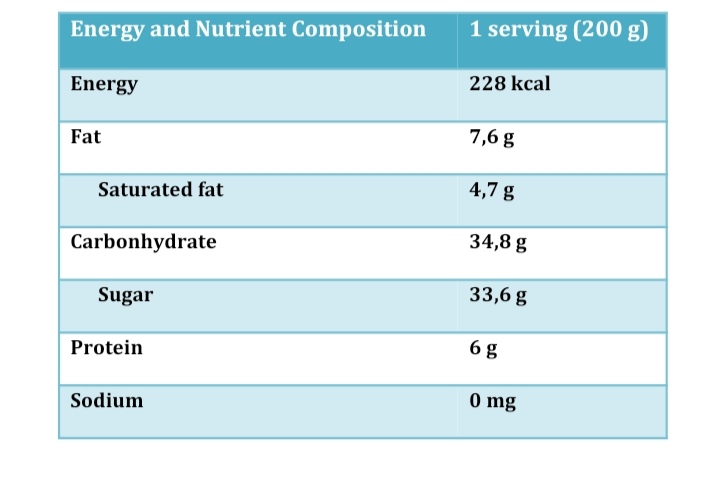
I have to solve problem related fruit yogurt formation with no added sugar. Information about the product is in pictures.

Ingredients: pasteurized and homogenized whole milk, strawberry, sugar, carrageenan, yogurt cultures (S. thermophilus ve L. bulgaricus), citric acid and flavor
A) If use aspartame as a single sweetener, how much aspartame should it be used? What are some important points to consider when aspartame is used in this type of product?
B) How about if a blend of aspartame and saccharin is used? How much of each should be used?
I am not getting what is use of R here and how can i get S, please help me

4 posts – 2 participants

Read full topic

https://fstdesk.com/t/use-of-stevens-law-in-product-formation/5119